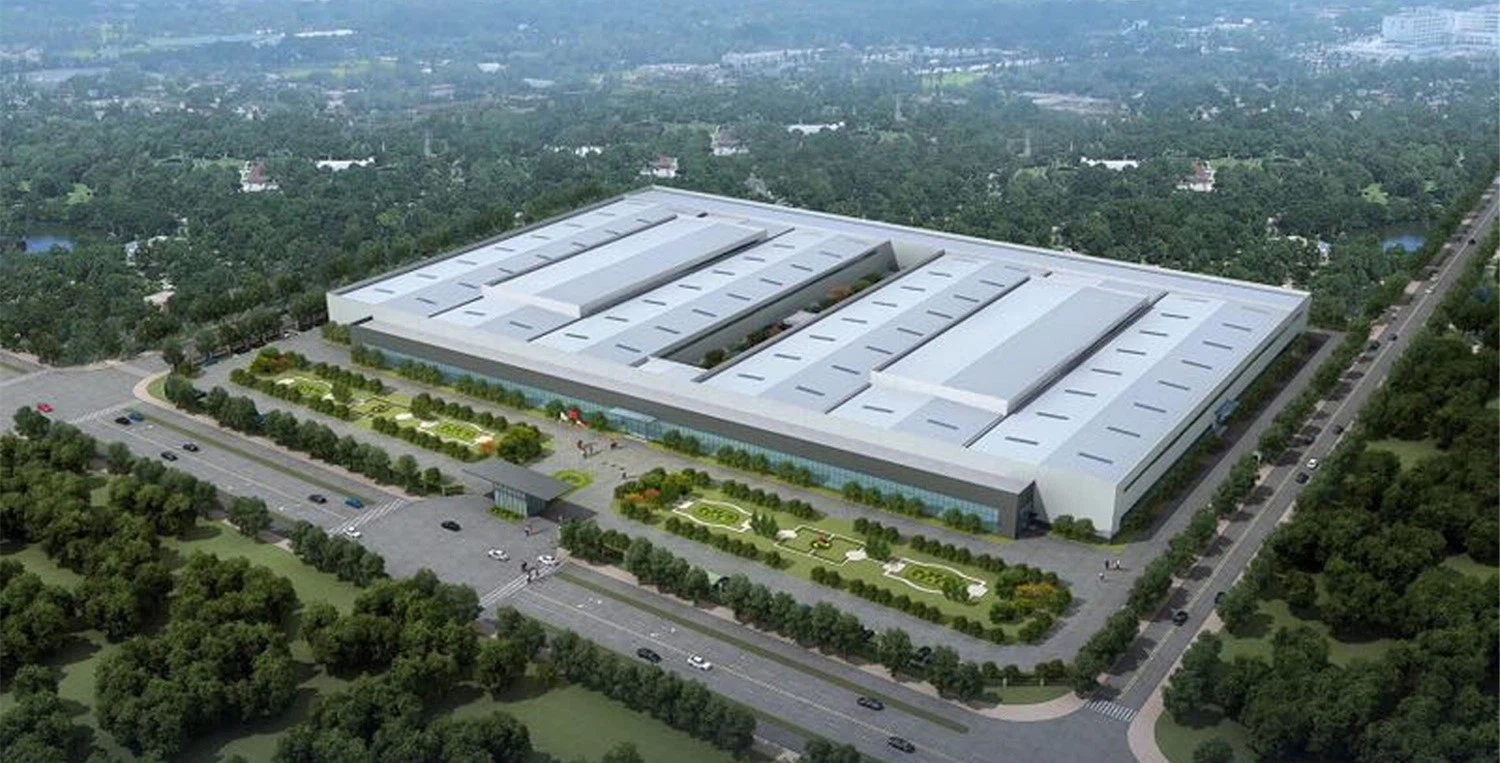
Temper Furnace

HOW DOES TEMPERING WORK?


Tempering is a process that dates back millennia, and the theory behind it has remained relatively unchanged in the centuries since. It is the process of accessing the highest possible intersection of strength and elasticity of a ferrous, or iron-based, metal product by heat-treating it to a limited degree, typically after the quenching process.


Modern tempering processes may be theoretically like their ancient counterparts, but the equipment currently used is vastly improved. Quenching, for example, which once required a homogenous liquid such as mercury to appropriately precipitate hardening of a ferrous metal alloy, can now be accomplished using vacuum or gas flow techniques. Tempering furnaces have similarly enabled new capabilities for 'softening' a ferrous metal after the product has been quenched.


Iron-based metal products are uniformly heated to temperatures ranging up to 1,650°F (900°C), and are then soaked in a liquid bath or an air furnace. Typically, the material will be allowed to soak in the quenching environment for a period of minutes before it is quenched in a liquid material to encourage the formation of high strength martensite within the material. After the product has been cooled, it will be transferred to a tempering furnace to reduce its strength and brittleness to a desirable degree.


A tempering furnace uses ceramic heating elements lined with electrical wires or coils to uniformly heat a sample chamber to different heating ranges depending upon the desired material characteristics of the product. An iron-based metal is heated in a tempering furnace to between 300 – 750°C (572 – 1382°F), to encourage phase transitions within the martensite structures and reduce the hardness of the material while improving its ductility. It is crucial that the tempering furnace can accurately maintain temperature levels and temperature uniformity throughout the sample chamber to negate the likelihood of metal warping or fracture.


video-bg


2023091316394453fa1564366b4f9b8556f79baf109d26

Addressing Critical Issues

WNJ has been a global enterprise specializing in spring machines for over 28 years, It has been a leader in Chinese spring machinery in spring coiling machines, spring forming machines, spring grinding machines, spring temper furnaces, and other related equipment. The company is acknowledged as the ONLY ONE new national technology enterprise of the spring machinery industry in China and devoted itself to providing better products for customers with CNC spring coiling machines and solutions.WNJ is a leading spring machine manufacturer in China and also is an expert in designing and manufacturing springs according to customers’ requirements.

Always Provice More Better Spring Machines for Customers


WNJ has set up one of the world class advanced centres for spring machine technology. For WNJ,the new HQ serves as both a milestone for its long-lasting success as a company and a solid foundation for further growth and development. global technologies for wire forming and spring making. Better product for customers CNC Spring Coiling Machine.

Automation Solutions

We adhere to provides global users with good quality and services.

●Telecommunications Industry
●Mobility Automotive
●Construction Industry
●Medical Equipment Industry


1


Our Certificate


c
1

CE Certification

2

CE ISO9001

3

CE/EMC TEST REPOR

202309131636220c7fc451fdab484b81643b2f92d1e0bc
 

International Expansion and Growth


Zhejiang Omnipoten Spring Machine Co., Ltd. is a leading spring machine manufacturer in China, specializing in CNC spring coiling machines, spring forming machines, spring grinding machines, spring seamless machines, spring temper furnaces, and other related equipment. The company has been awarded as the only national new technology enterprise in the spring machinery industry, and also the main member of China Spring Association.

Provide One-stop Solution

First of your perferred supplier of spring machines from design to production

We adhere to provides global users 

Superb Process Technology

Global technologies for wire forming and spring making, aim to better products for customers with CNC Spring Coiling Machines.

Advanced Design Concept

WNJ equipment is designed with two things in mind: Value and Profit, Manufactured with high-value engineering

Emerging Brand Development

WNJ is committed to building world world-class intelligent equipment brand in the spring machine industry, provides globa

empering Furnace Description


A tempering furnace is a type of industrial oven designed to heat treat a ferrous metal product and increase its toughness. In metallurgical terms, the toughness of an alloy describes its capacity for elastic deformation and energy absorption before the material fractures. It is part of a complex relationship between a metal's ductility and its strength, with high toughness values requiring a delicate intersection of the two.


Typically, high strength materials are not ductile – and vice versa – but heat treating certain materials in a tempering furnace can unlock beneficial values on both axes of this mechanical dynamic.

 
Continuous Tempering Furnace Features

Continuous tempering furnaces are used to heat glass to a high temperature, then rapidly cool it to create a tempered glass product. They are a more efficient and cost-effective way to produce tempered glass than batch tempering furnaces.

Furnace structure

Continuous tempering furnaces are typically made of steel, which provides good heat resistance and corrosion resistance. The furnace interior is divided into multiple heating chambers, each with its own temperature control system.

Heating method

Continuous tempering furnaces typically use electric heating, but can also use gas heating. Electric heating is more efficient, but more expensive; gas heating is less expensive, but less efficient.

Glass conveyor system

The glass conveyor system in continuous tempering furnaces is typically made up of rollers or chain conveyor belts. Roller conveyor systems are more efficient, but more expensive; chain conveyor belts are less expensive, but less efficient.

Temperature control system

The temperature control system in continuous tempering furnaces typically uses a PID control system. PID control can ensure that the glass temperature remains stable during the tempering process.
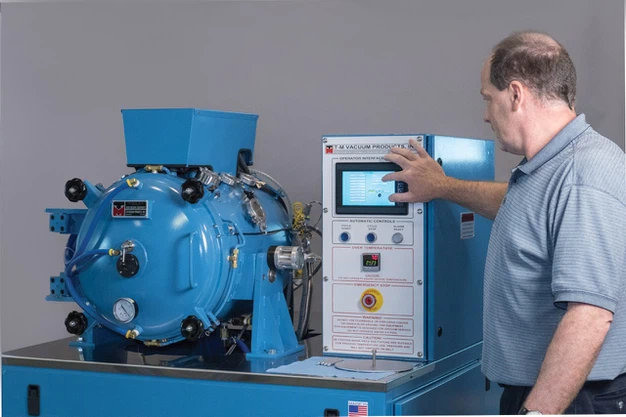
wnj


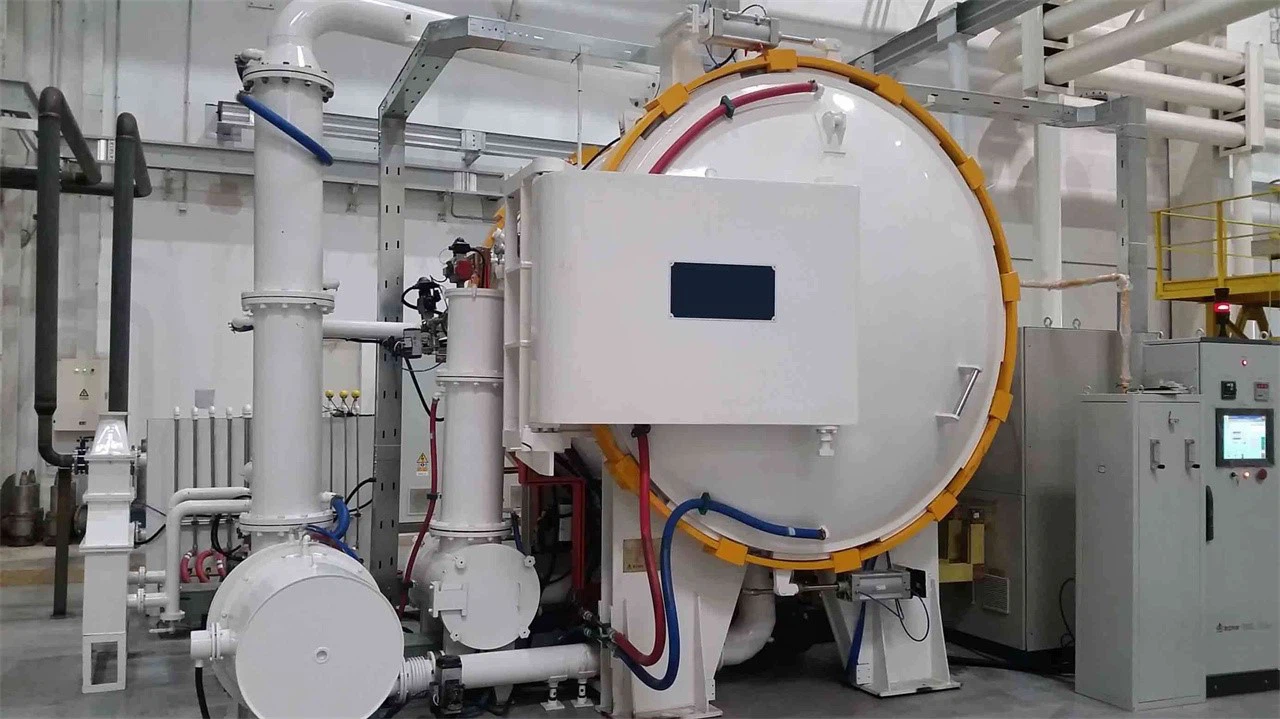
Characteristics of a Vacuum Tempering Furnace Are:

Uniform temperatures in the range. 800–3,000 °C (1,500–5,400 °F)
Commercially available vacuum pumping systems can reach vacuum levels as low as 1×10⁻¹¹ torrs (1.3×10⁻¹¹ mbar; 1.3×10⁻¹⁴ atm)
Temperature can be controlled within a heated zone, typically surrounded by heat shielding or insulation.
Low contamination of the product by carbon, oxygen and other gases.
Vacuum pumping systems remove low temperature by-products from the process materials during heating, resulting in a higher purity end product.Quick cooling (quenching) of product can be used to shorten process cycle times.
The process can be computer controlled to ensure repeatability.


Vacuum Tempering Furnace uses

This section does not cite any sources. Please help improve this section by adding citations to reliable sources. Unsourced material may be challenged and removed. (July 2013) (Learn how and when to remove this template message)
Vacuum furnaces are used in a wide range of applications in both production industries and research laboratories. For example, a low-temperature vacuum oven can be used for drying biomass much more efficiently than drying alone.[3] Similarly, microwave-vacuum drying has shown potential for drying foods like cranberries.
WNJ 2
Applications of Vacuum Tempering Furnaces
solution-08webp

Tool and Die Manufacturing

Tempering tools and dies to enhance their wear resistance and cutting performance

solution-05webp

Aerospace Components

Tempering aerospace components to withstand extreme conditions and ensure safety

solution-03webp

Automotive Parts

Tempering automotive parts to improve their strength, durability, and performance
solution-02webp

Medical Devices

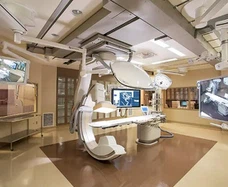
empering medical devices to ensure biocompatibility, strength, and precision

FAQ

Q: What is a continuous furnace?

A: A continuous furnace is an industrial furnace that uses a conveyor or belt to carry process parts or material through the primary heating chamber for rapid thermal processing. It is designed for the fast drying and curing of products and is an excellent choice for manufacturing medium and high-volume products.

Q: What is a tempering furnace?

A: A tempering furnace is a type of industrial oven designed to heat treat a ferrous metal product and increase its toughness. In metallurgical terms, the toughness of an alloy describes its capacity for elastic deformation and energy absorption before the material fractures.

Q: What is continuous heat treatment?

A: Overview. Continuous Heat Treat Furnaces refer to the fact that product is continuously moving into and out of the furnace, with no real start and stop point in the process. These furnaces are most often used for high production parts such as pipe, bar stock and wire

Q: What is the difference between a batch furnace and a continuous casting furnace?

A: Batch furnaces are less costly and can be tailored to a specific application such as glass melting. However, continuous furnaces are more efficient at heating a range of products. Deltech Furnaces have a range of both continuous and batch furnaces to suit every application.

Q: What is a tempering furnace?

A: A tempering furnace is a type of industrial oven designed to heat treat a ferrous metal product and increase its toughness. In metallurgical terms, the toughness of an alloy describes its capacity for elastic deformation and energy absorption before the material fractures.

Q: What is temper in heat treatment?

A: Tempering is a type of heat treatment used to increase the toughness of certain metals, most commonly iron-based alloys like steel. The metal being treated, using this process, is heated under its critical point temperature and then air-cooled.

Q: What is the purpose of tempering?

A: Tempering is a type of heat treatment used to increase the toughness of certain metals, most commonly iron-based alloys like steel. The metal being treated, using this process, is heated under its critical point temperature and then air-cooled

Q: What is the purpose of tempering?

A:Tempering helps to relieve stress making the metal easier to weld or machine. Increases strength while making the material more flexible and ductile. Increases hardness and introduces wear-resistant properties to the surface or through the entire metal

Q: What is the process of tempering furnace?

A: During the tempering process the metal being treated is heated in a temper furnace to a specified temperature for a period of time based on the desired level of hardness, strength, and ductility. Higher tempering temperatures will result in high ductility, but low strength and hardness

Q: What are the 3 methods for tempering chocolate?

A:He gives us three methods: tempering in a bain-marie (the most well-known and simplest technique), seeding and, finally, tabling, which is a little more complicated.

Q: What is the temperature for tempering?

A: The most common tempering temperatures range between 160 °C and 600 °C. Tempering below 300 °C and above 500 °C is referred to as low-temperature and high-temperature tempering, respectively.

Q: What is difference between hardening and tempering?

A: The maximum hardness of a steel grade, which is obtained by hardening, gives the material a low toughness. Tempering reduces the hardness in the material and increases the toughness. Through tempering you can adapt materials properties (hardness/toughness ratio) to a specified application.

Q: What temperature does steel lose its temper?

A: In general, steel begins to lose its temper at temperatures above 600°F (316°C). However, some high-speed steels can retain their temper up to 900°F (482°C).

Q: What is a glass tempering furnace?

A: Flat glass tempering furnace is designed to make heat resistant and stronger glass for the cut and processed glass. Flat glass, reflective glass, colored glass and hard-coated (Low-E) glass can be tempered. Glass tempering is performed in maximum quality.

Q: What is the characteristics of tempering furnace

A: A tempering furnace uses ceramic heating elements lined with electrical wires or coils to uniformly heat a sample chamber to different heating ranges depending upon the desired material characteristics of the product.

Q: How to maintain the chiller of the glass tempering furnace?

A:The chiller of the glass tempering furnace consists of a roller table and two quenching boxes, Once there is glass broken in the chiller, the glass debris could damage the kevlar ropes on the roller, affecting smooth transporting of glass to the unloading table, resulting in interruptions in the entire glass tempering process.

If the rope is found broken, it should be replaced immediately. After removing the damaged kevlar rope, clean the adhesive residue off the rollers to ensure a clean and polished surface .When winding the kevlar rope, maintain proper tension to keep it straight and untwisted. Coil the rope around the roller with equal spacing and make it in the direction opposite to the rope of the neighboring roller. Apply adhesive only to the side attaching the roller and make sure that there is no adhesive on the rest of the rope surfaces and secure both ends.

Check the conveyor bearings in the chiller regularly. Repair the bearing in time when it gets stuck. The broken wind pipe of the quenching system should be replaced to ensure the stability of the wind pressure.

Q: What is a process furnace?

A:As this charge descends through the blast furnace it meets highly reducing and hot gases. The transfer of energy from the hot gases to the solid charge, the reduction of the iron ore into hot metal, and the formation of a slag phase (i.e., complex liquid oxide phase) take place

Q: What is the purpose of a vacuum furnace?

A: Vacuum furnaces are used to carry out processes such as annealing, brazing, sintering and heat treatment with high consistency and low contamination. Characteristics of a vacuum furnace are: Uniform temperatures in the range. 800–3,000 °C (1,500–5,400 °F)

Q: Can I vacuum my furnace?

A: Carefully vacuuming the interior of the furnace picks up a lot of dirt and debris. You may even have dead insects and spider webs in there, too. A thorough vacuuming could remove a lot of the unwanted accumulations inside the furnace. Adhere to smart steps for safety before starting.

Q: What is the difference between a vacuum furnace and an atmosphere furnace?

A: The difference between an atmosphere furnace and a vacuum furnace is that vacuum heat treatment technology is an integrated technology connected with heat treatment technology and vacuum heat treatment technology, which is a total and partial heat treatment performed under a vacuum.

Q: What are vacuum furnaces used for?

A: Vacuum furnaces are used to carry out processes such as annealing, brazing, sintering and heat treatment with high consistency and low contamination. Characteristics of a vacuum furnace are: Uniform temperatures in the range. 800–3,000 °C (1,500–5,400 °F)

We're well-known as one of the leading temper furnace manufacturers and suppliers in China. Please rest assured to wholesale high quality temper furnace at competitive price from our factory. For custom service, contact us now.

Hardening And Tempering Furnace, Tempering Furnace Price, Spring Temper Furnace

(0/10)

clearall